


On a quiet winter morning, we wound along the shoreline of Lake Biel toward Twann. The vines followed the curves of the land, the water shimmered below, and a cool breeze carried the kind of stillness you only find beside a lake in January. We had come to visit Joel Pfister — the winemaker behind a sparkling Mousseux Extra Brut that our guests at a recent tasting had flatly refused to believe wasn’t a Champagne from across the border in France.
He wasn’t just making wine, we suspected. He was capturing a terroir in a bottle. We went to find out how.
The Place
Pfister took over a small vineyard in Ligerz in 2019. What began as a personal ambition has quietly become something rather serious — organic certification, hand-harvested fruit, and a growing reputation among those who pay attention to what is happening on the shores of Lake Biel. About half the vineyards around the lake now farm organically. Pfister is among them.
We took a walk up the hill through the vineyards with Pfister to look at the soil and vines.
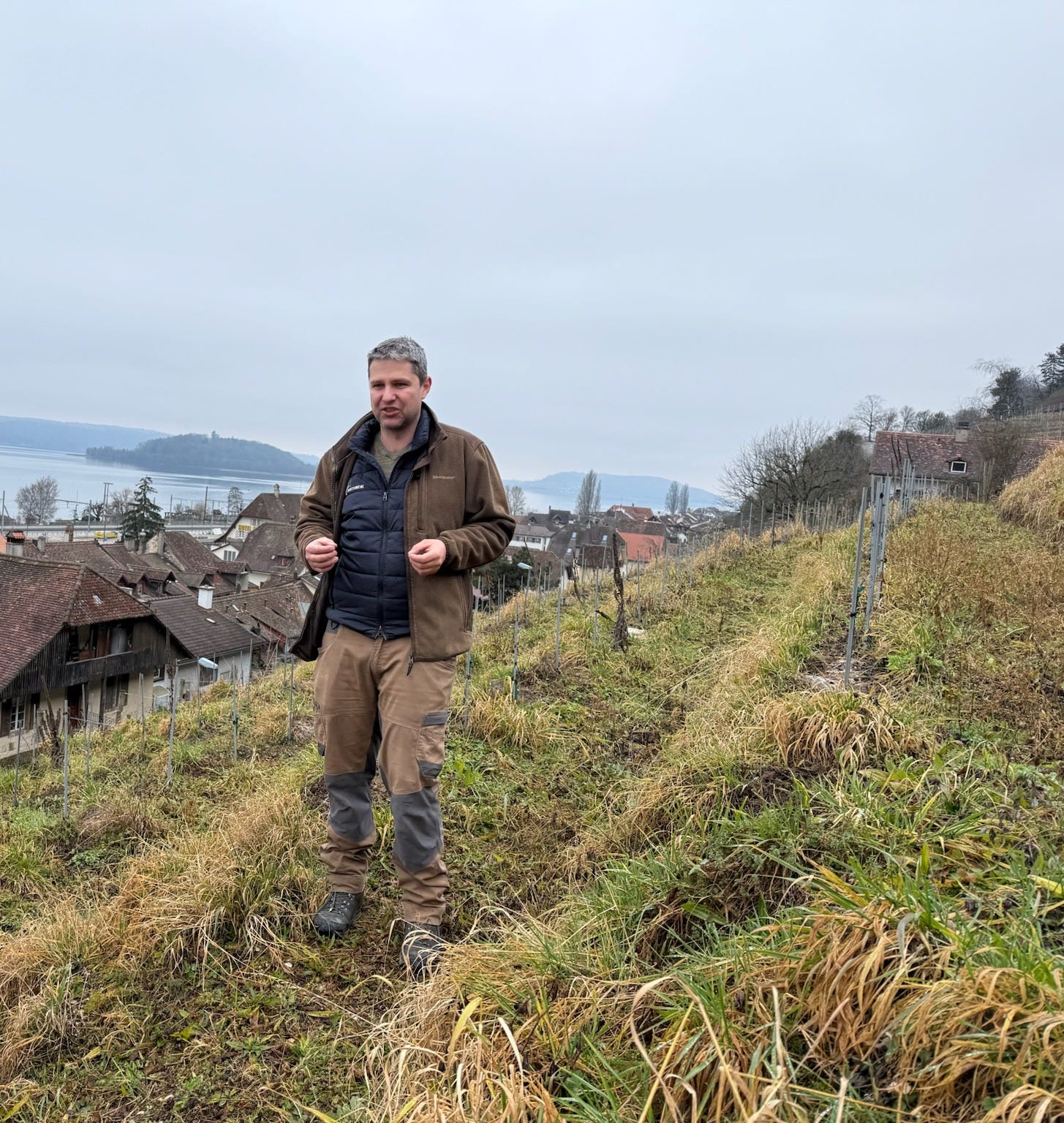
The microclimate here is generous and precise in equal measure. The lake tempers temperatures at night, preserving acidity and extending the ripening season. The terraced slopes capture the sun by day.
The soil in Twann is sandy loam and is characterized by its lime and clay content. The rock types found in his vineyard are mainly limestone, marl, and claystone. It is a rocky remnant of glacial activity, the kind of substrate that keeps vines in a productive struggle and rewards patience with mineral precision.
Here is the lithological overview of the vineyard by Lake Biel, with credit to he Association Roche et Vin for their the excellent book set Roches et Vins, available in either French or German.
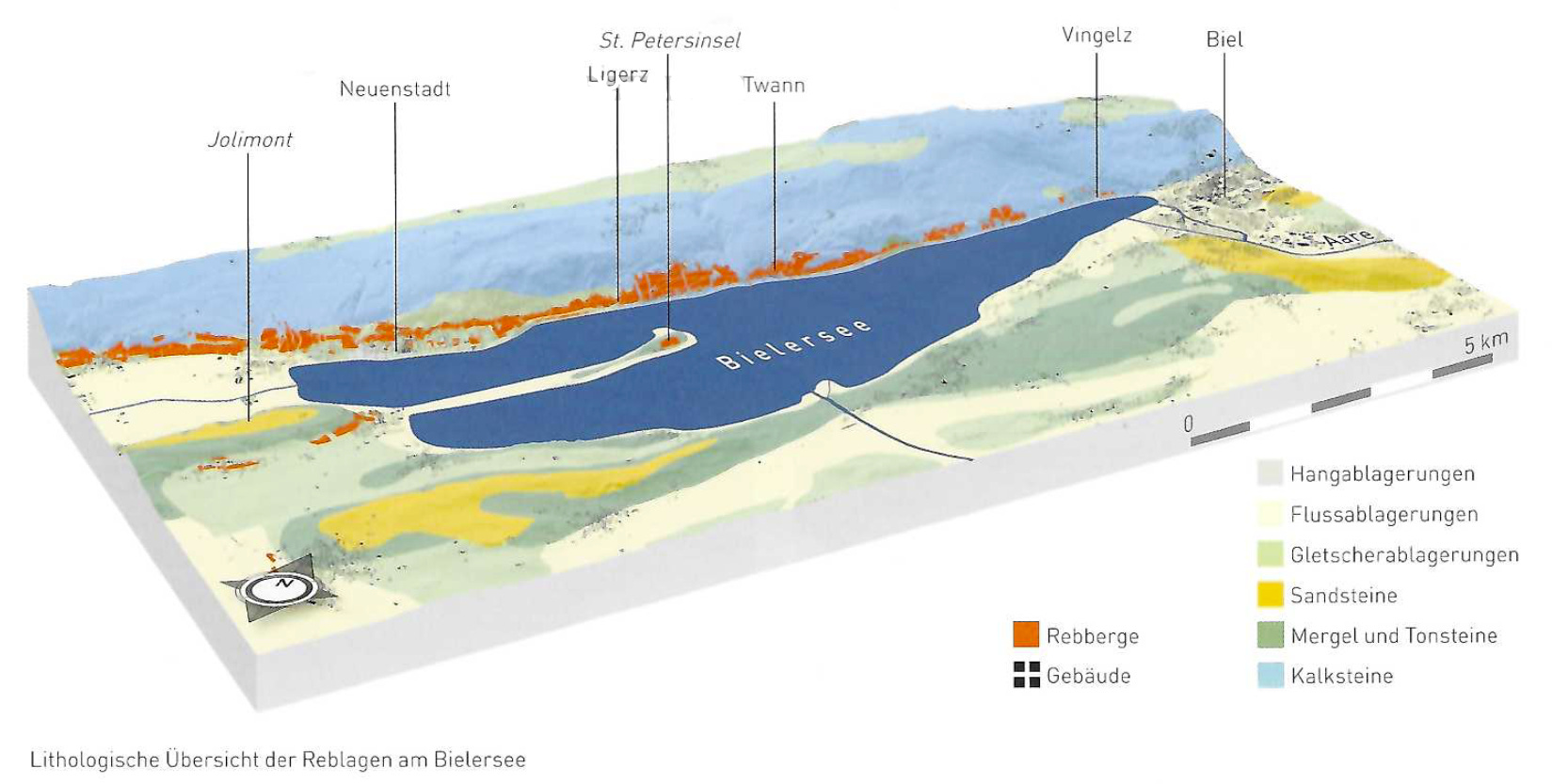
Image credit: From the highly recommended book set Roches et Vins, 2018.
This is the essence of terroir: not just geography, but the relationship between the plant and the effort it must make to survive. More effort, better wine.
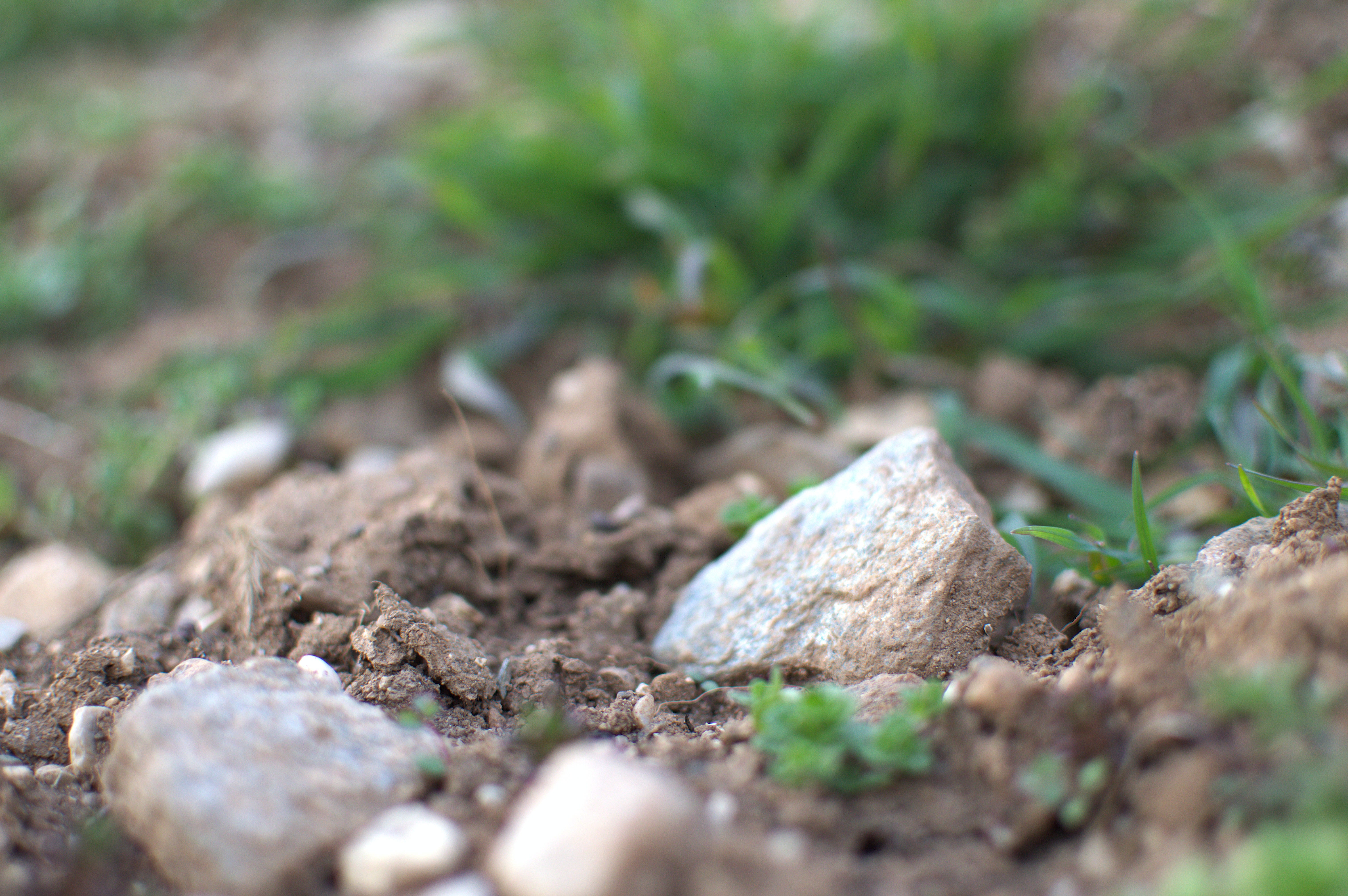
Image credit: Joel Pfister
The Cellar
When we arrived at the cellar, Pfister had prepared a generous platter of local meats and cheeses already laid out, which we appreciated enormously. Old wood carvings ran along the beams overhead, relics of an earlier age. One inscription caught my eye: Die Schönste Gabe des Weines ist die Freundschaft or The most beautiful gift of wine is friendship. A good philosophy for a cellar.
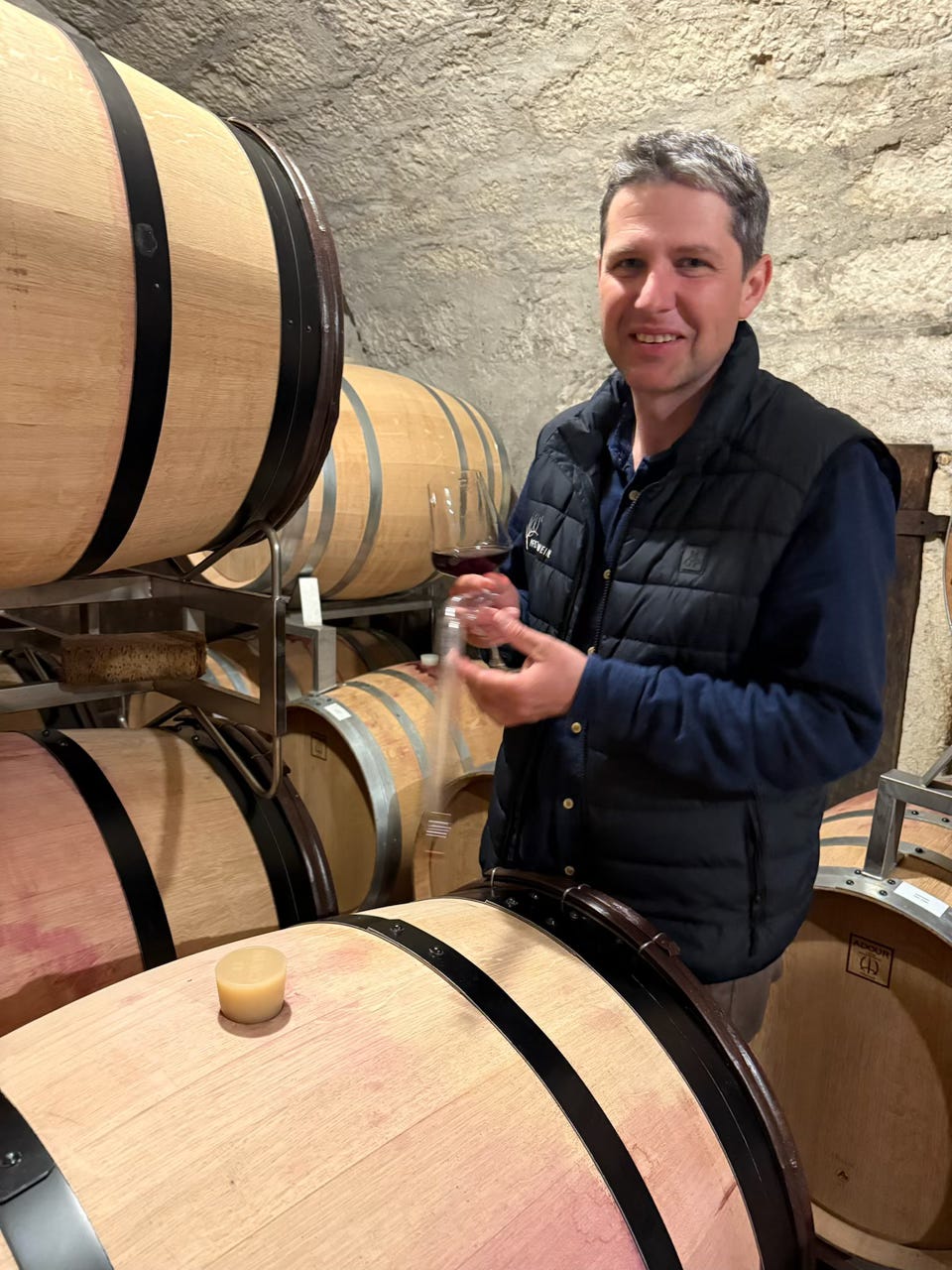
Along the walls in the back room, barrels of red were slowly finding their character.
The Philosophy
Pfister trained as an apprentice under a seasoned winemaker, then spent years moving between cellars across the region. Each experience, he told us, added a new layer of understanding. The accumulation of all that time is visible in how he works today — deliberately, unhurriedly, with considerable respect for what nature is already doing without his interference.
“The most interesting wines are produced with as little intervention as possible,” he said, drawing a sample of the 2024 Pinot Noir directly from the cask for us. It was extraordinary. Low intervention, but very high attention.
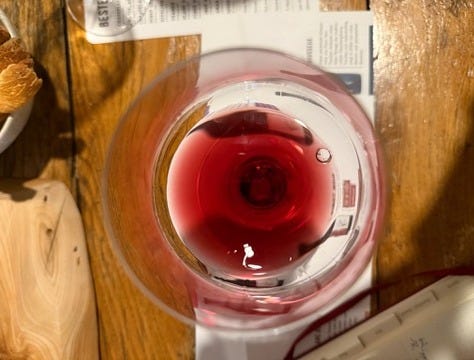
His approach rests on three convictions. First, that healthy fruit is everything — ninety percent of the work happens outside, in the vineyard, before the grapes ever reach the cellar. Second, that wild indigenous yeasts — those living on the grape skins and in the cellar itself — create a complexity that commercial yeasts simply cannot replicate. Third, that time is non-negotiable. If a vintage needs two years to settle, it gets two years. Nobody is rushing anything here.
He selects casks of three different ages for his Pinot Noir barrique, each contributing something distinct to the final wine. It’s a technique that draws out the character of a vintage rather than imposing one upon it.
The Wines
1. Sauvignon Blanc Orange — Amphora Wine 2023
Varietal: 100% Sauvignon Blanc
Vinification: 2 weeks of skin maceration. Amphora, unfiltered. Lake Biel AOC. CH-BIO. 12% alcohol.
Appearance: Salmon-hued, glowing in the glass.
Nose: Classic citrus zest — energetic and immediate.
Taste: Lively acidity with a salty mineral edge. Ripe citrus, orange zest, genuine verve. The finish is long and persistent.
Paired with: Exceptionally versatile — spicy dishes, Mediterranean food with citrus notes, or simply good company. Orange wine rewards adventurous pairing.
Storage Potential: Drink now through 2027.
2. Blanc de Noir 2023
Varietal: 100% Pinot Noir
Vinification: Twann – Lake Biel AOC. CH-BIO. 13% alcohol.
Appearance: Delicate pink, luminous in the glass.
Nose: Sun-warmed wild strawberries, a whisper of raspberry, crushed petals.
Taste: Lively and charming from the first sip. Pure ripe berry fruit, light and dry, with a clean mineral finish that lingers just long enough to make you reach for the glass again.
Paired with: A quintessential summer wine. Picnics, light salads, grilled vegetables, a sunny terrace aperitif.
Storage Potential: Drink within 1–3 years.
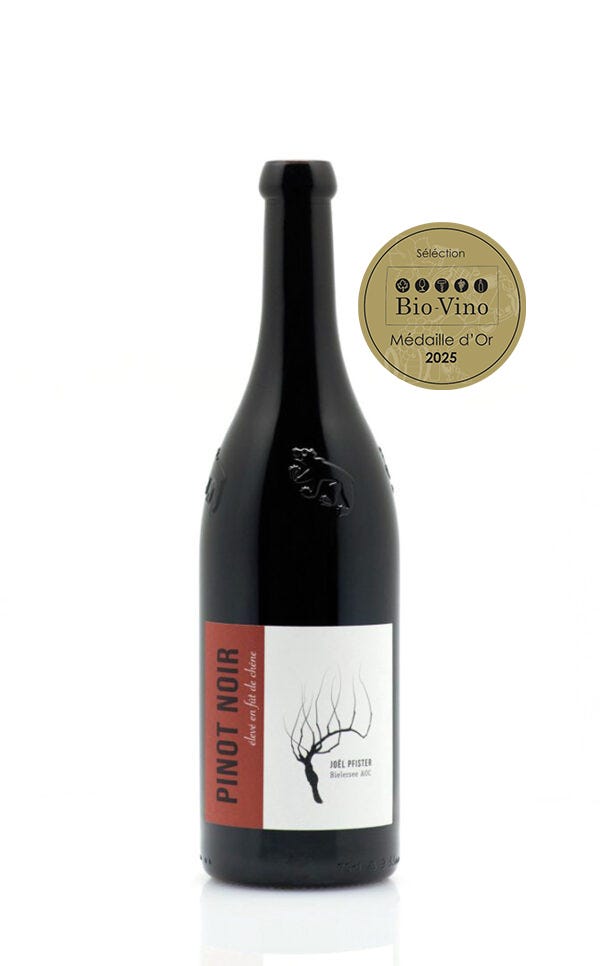
3. Pinot Noir Barrique 2023
Varietal: 100% Pinot Noir
Vinification: Oak barrels, three different ages. Unfiltered. Lake Biel AOC. CH-BIO. 13% alcohol.
Appearance: Translucent ruby red, with a lively sheen that catches the light like the lake surface outside.
Nose: Red fruits, blackcurrants, pepper and honey, with an elegant freshness underneath.
Taste: Beautiful fruit intensity, pure and ripe, carried by a vibrant acidity that keeps each sip interesting. The tannins are supple, the balance between fruit and oak is exactly right.
Finish: A pleasant persistence of honey, with a slight salty edge.
Pair with: Game birds, turkey, poultry. Pfister himself recommends waiting until 2026–2029 before opening it. We will try our best. (We make no promises.)
Storage Potential: 3–6 years.
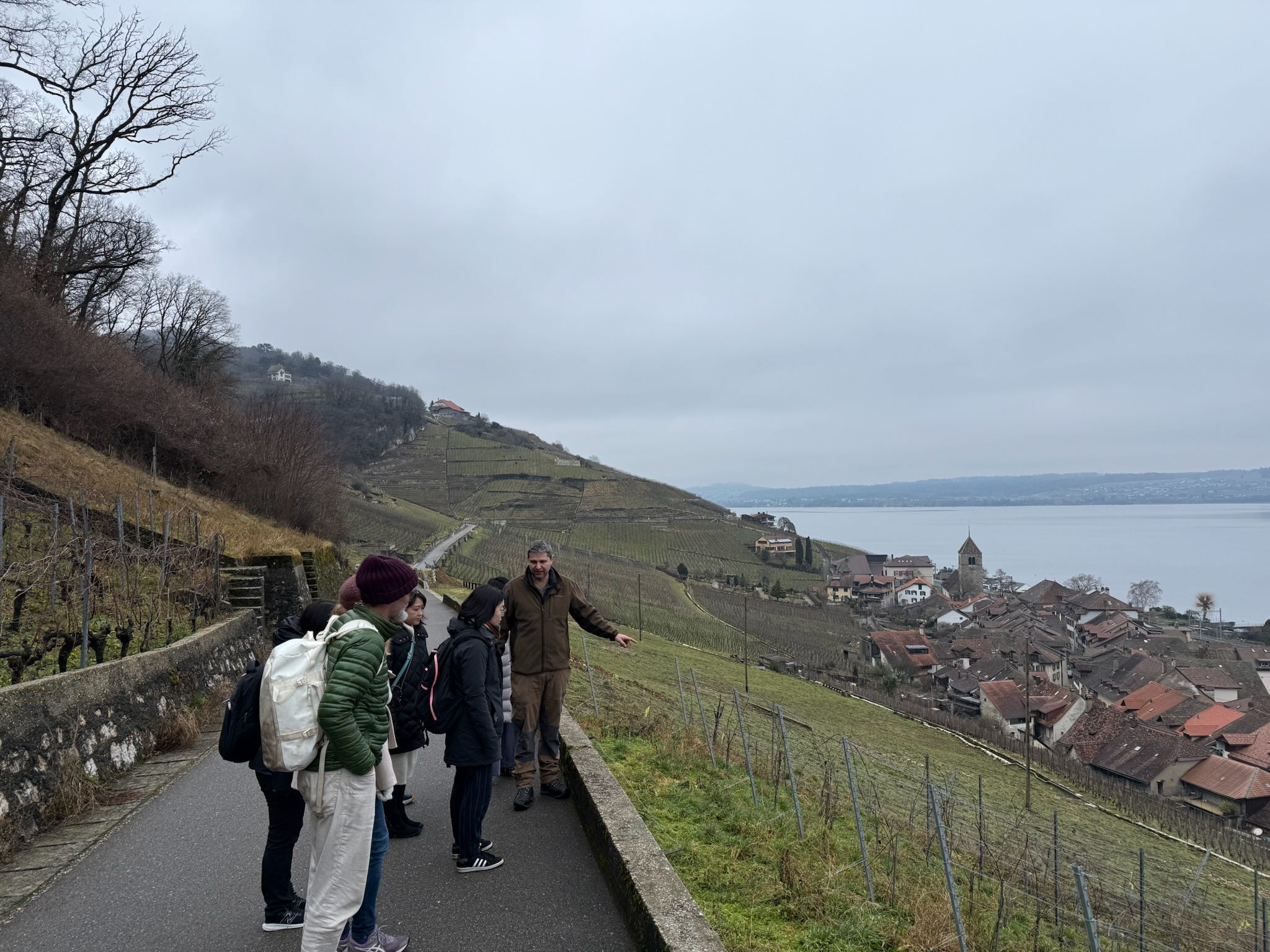
Visiting the Vineyards with Pfister
Why It Matters
Driving home, we were still talking about the cask tasting — the privilege of tasting a wine that won’t exist in the same form again. A visit to Pfister is a reminder of what slow craft looks like up close. He isn’t trying to make a product that tastes identical year after year. He is trying to capture a moment in time, on a particular parcel, on a particular slope, beside a particular lake.
Whether you are a seasoned oenophile or someone who simply loves a good glass with dinner, there is a world of discovery waiting here. Lake Biel deserves far more attention than it receives. Pfister is one very good reason to start paying it.
Visit by Appointment
Reserve a visit by calling 078 775 41 63 (in French, German or English) or email: joel (at) pfisterweine.ch.
Public Transit: The SBB/CFF train to Twann station drops you just a 2-minute walk from the cellar. A scenic ride, highly recommended.
On Foot: The national tourism site MySwitzerland recommends a cycling route around Lake Biel that passes directly by the vineyard.
Address: Pfister Weine, Moos 15, Twann. Buy online at pfisterweine.ch.
We made a small group visit to Joel Pfister in 2026. You are very welcome to join us on future visits — details on our event calendar at luma.com/paxromanawines.